
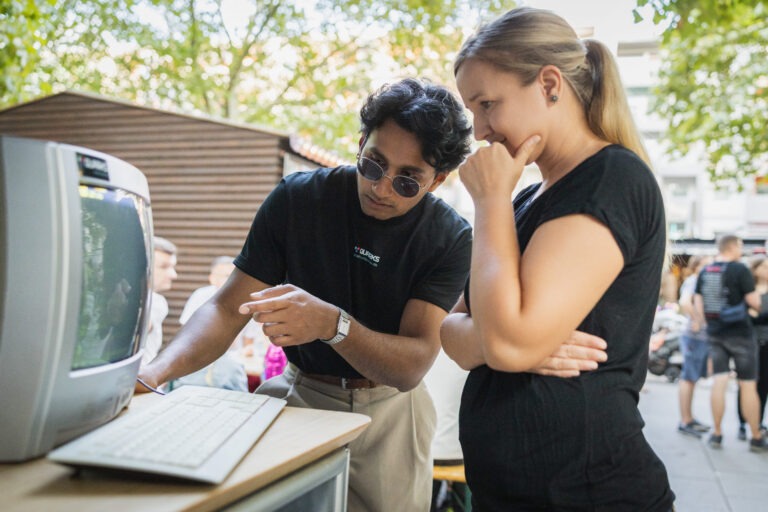
When Chance Becomes Reality: Siddharth Das on Quantum Computers and True Random Numbers
Yesterday, Siddharth Das from the Deutsche Telekom Chair of Communication Networks at TU Dresden gave an engaging lecture as part of the MINT digital lecture series, titled “When Chance Becomes Reality: Quantum Computers and Random Numbers.”. The talk bridged the gap between the fundamentals of quantum mechanics and their real-world applications in our digital lives.
What Connects Quantum Computers and Random Numbers
At first glance, quantum computers and random numbers might seem like two completely separate topics. However, as Siddharth Das vividly explained, both rely on the very same fascinating principles of quantum mechanics—and both are rapidly gaining importance for future key technologies.
In his talk, he first provided an accessible introduction to the core ideas behind quantum computing. Building on this, he highlighted an often-overlooked foundation of our digital infrastructure: randomness. Whether for secure encryption in communication, complex scientific simulations, or countless everyday digital applications, modern IT cannot function without reliable random numbers.
From Calculated to “True” Randomness
Classical computers hit a natural limit here, as they usually only simulate randomness using mathematical algorithms (known as pseudo-random numbers). Quantum systems, on the other hand, behave unpredictably by nature. Siddharth demonstrated how these quantum mechanical phenomena can be harnessed to generate truly random numbers and shared insights into how researchers are currently working to turn these effects into safe, efficient, and practical technologies.
Check out the official TU Dresden MINT digital page!