
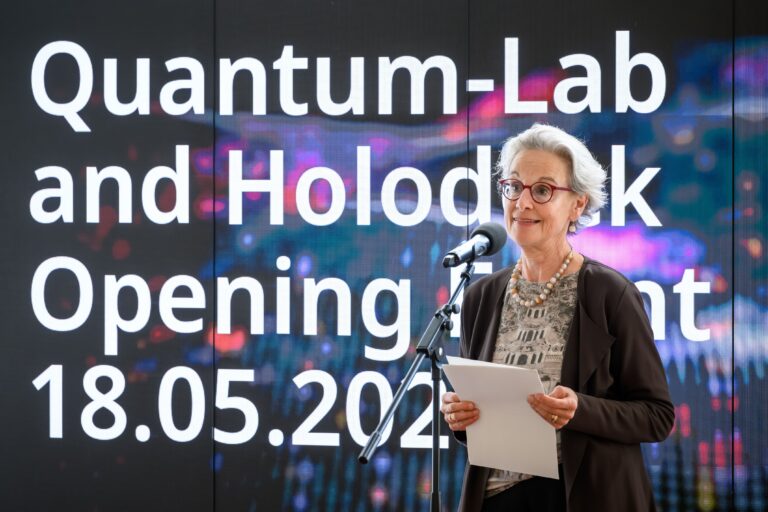
Telecommunications is on the verge of a massive leap forward. The Deutsche Telekom Chair of Communication Networks at TU Dresden has opened two high-tech research labs: the “Quantum Communication, Computing, and Sensing Lab” and the “Holodeck.” While the Holodeck makes virtual worlds experienceable without VR headsets, the quantum lab is set to lay the groundwork for the internet of tomorrow.
Quantum Technology: The Lab Connecting the Dots
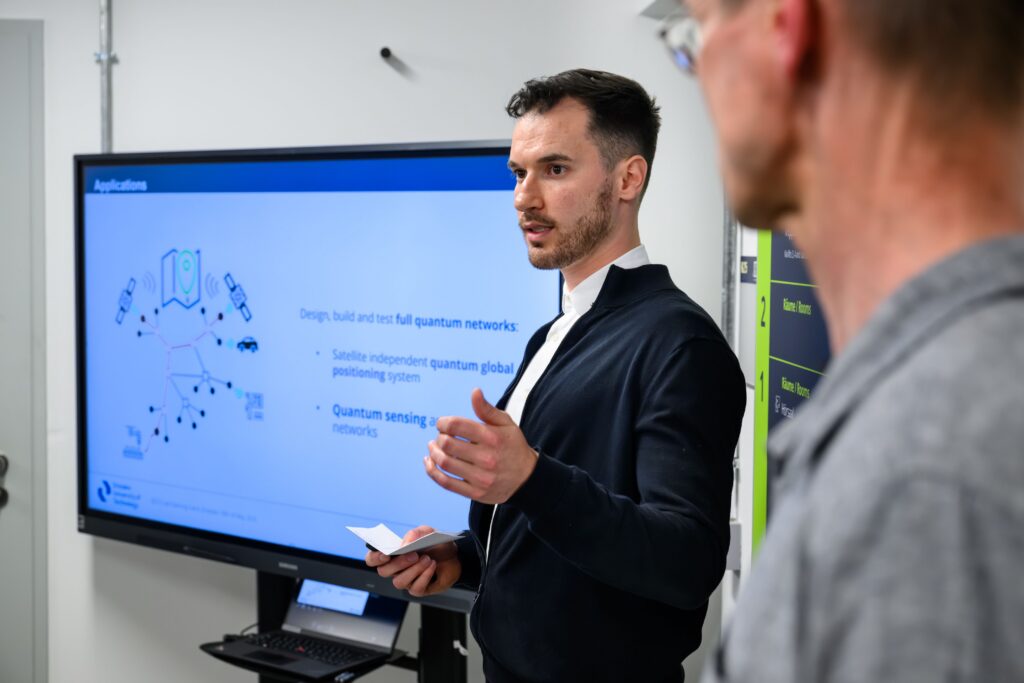
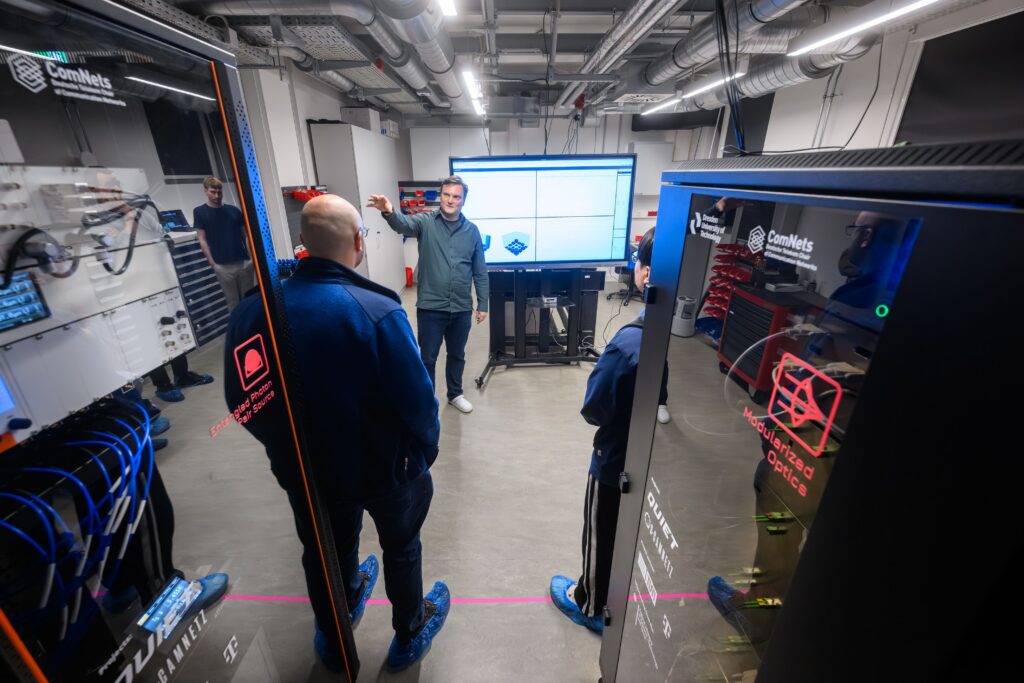
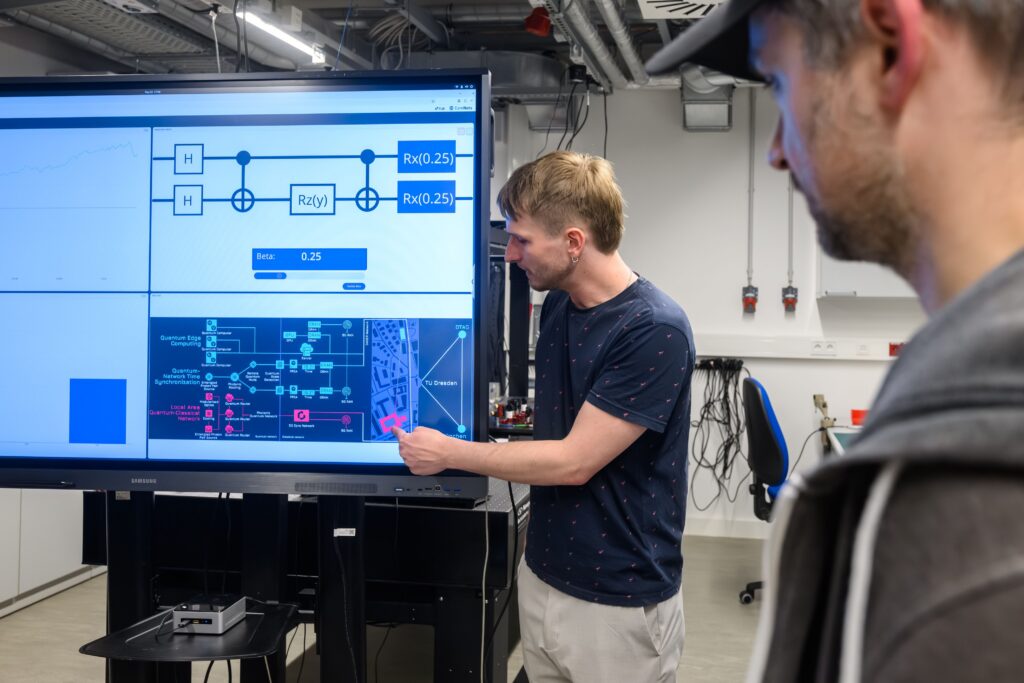
Until now, most people associated quantum technology in everyday life with encryption (like Quantum Key Distribution, or QKD). However, the new lab in Dresden is taking things a decisive step further. Here, researchers are bringing three fields together that have traditionally been studied in isolation:
- Quantum Communication: Data transmission utilizing quantum states (e.g., through entanglement).
- Quantum Computing: Ultra-fast information processing.
- Quantum Sensing: Highly precise measurements of physical quantities.
“Our goal is to move beyond isolated quantum applications and instead create integrated systems in which communication, computing, and sensing work together to enable real commercial applications,” explains Junior Professor Riccardo Bassoli.
What Does This Mean for the Networks of the Future?
By adopting this holistic approach, researchers aim to push past the limits of current network technology and pave the way for 6G. This isn’t just theoretical physics: the team is specifically investigating how to integrate these quantum systems into our existing infrastructure, such as current 5G networks. This promises massive breakthroughs in the performance, security, and functionality of digital networks.
Another Big Opening: The Holodeck – VR Without the Headset
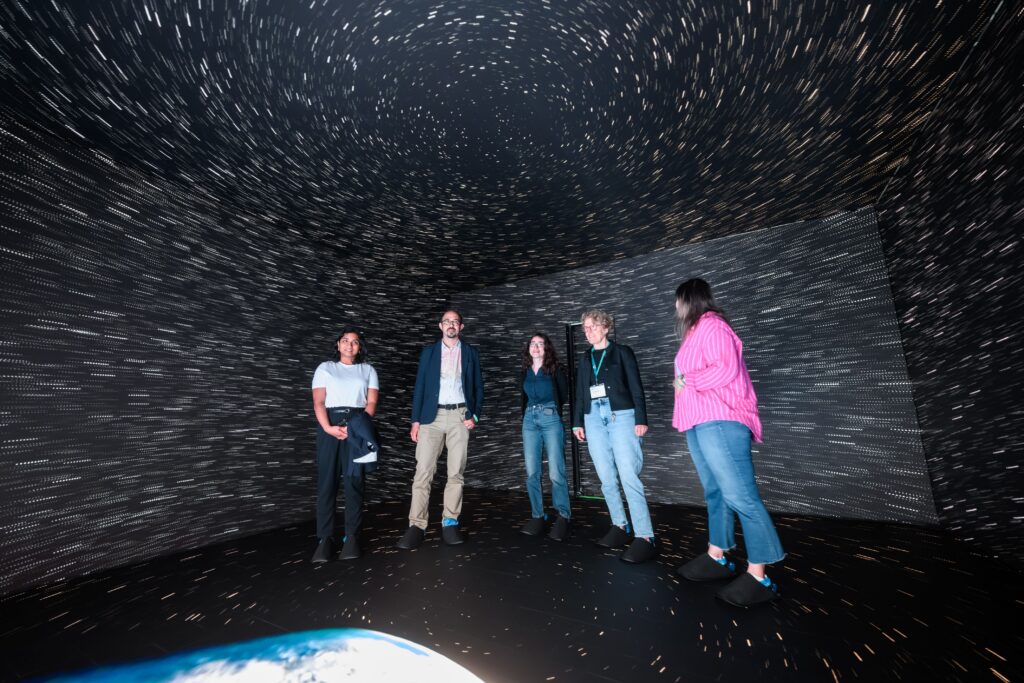
Complementing this research is the “Holodeck”—a fully LED-based, immersive space. The breakthrough here is that multiple people can experience digital worlds together in real time without needing to wear clunky VR headsets.
The Holodeck serves as a testing ground for the interface between humans and technology, focusing on:
- Human Interaction: How do we behave in highly immersive scenarios?
- Industry 4.0: Virtual prototype development and collaboration across digital supply chains.
- Decision-Making Processes: How do immersive media affect our perception and the future of work environments?
A Milestone for Science
Those groundbreaking projects are funded by the Federal Ministry of Research, Technology and Space, the German Research Foundation (DFG), and the State of Saxony. The technological implementation is being carried out in close collaboration with strong regional partners, including the CeTI Cluster of Excellence, the 6G-life project, and QUARKS.
© Frank Grätz