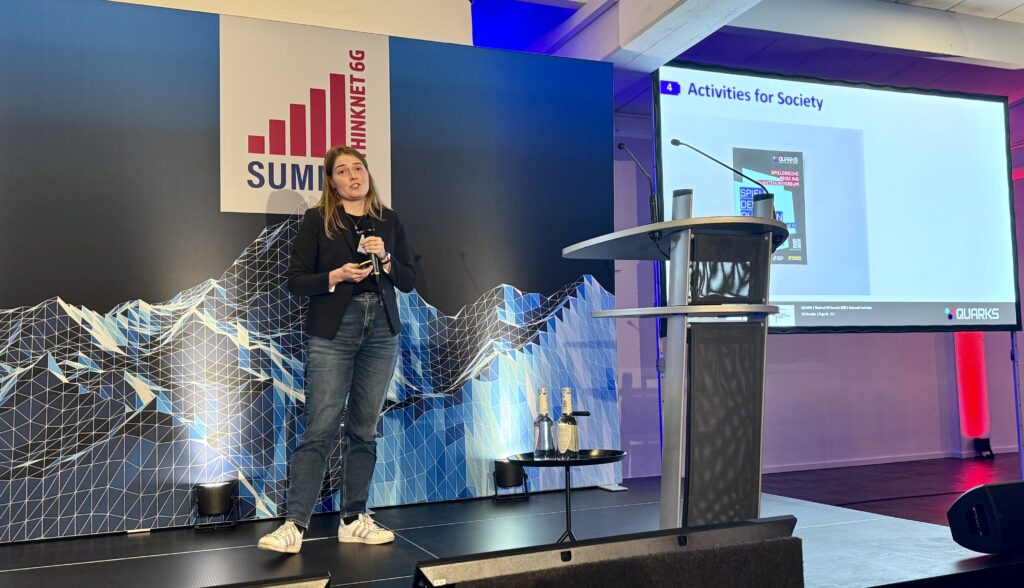
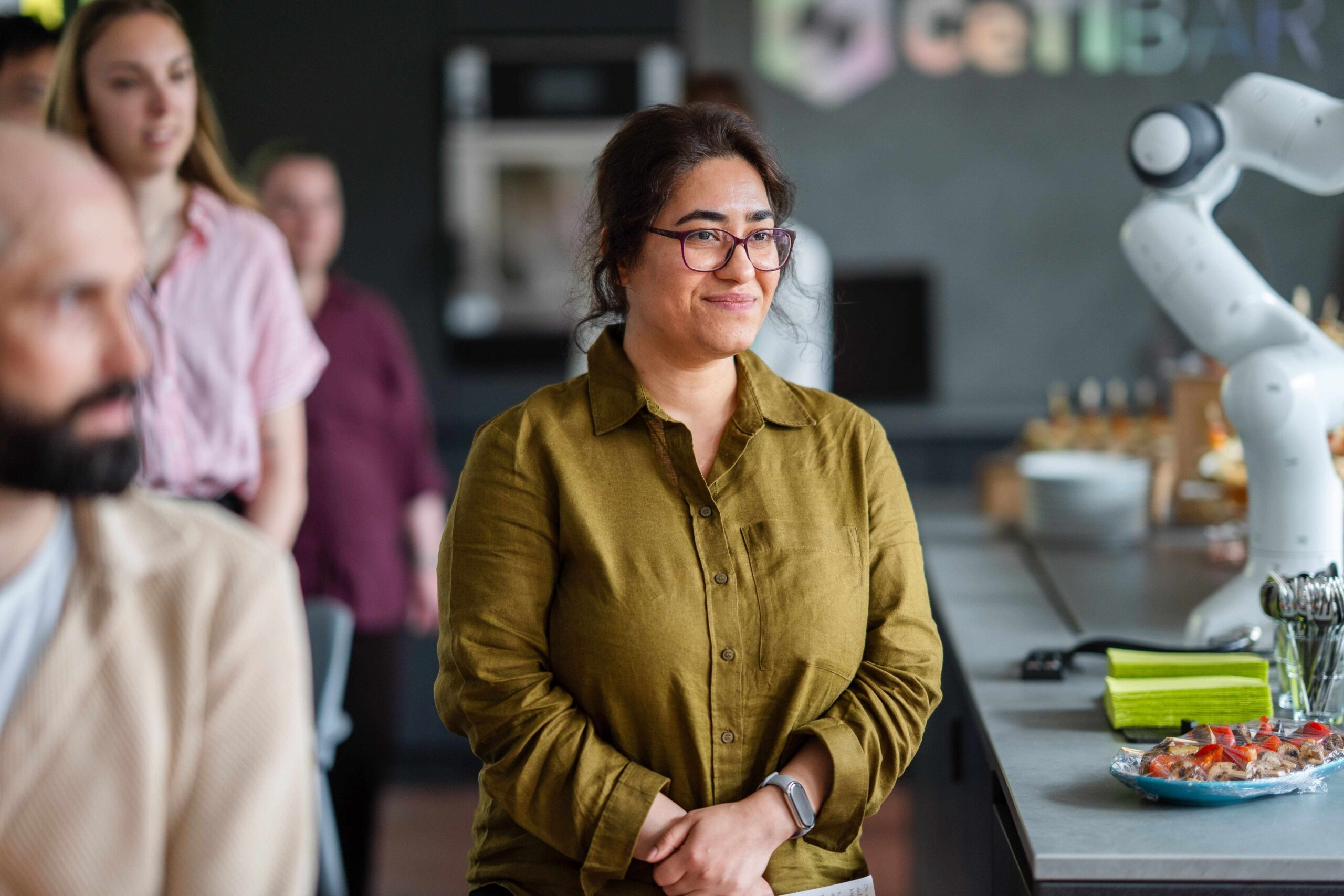
IEEE Quantum Week 2026 in Toronto was a success for the QUARKS project, featuring three impactful contributions that spanned quantum hardware, quantum interconnects, and distributed computing architectures.
The week kicked off on Monday, September 14, with Sakineh G. presenting “Scheduling Under Stochastic Control Drift in a Room-Temperature NV-Center Quantum Processor.” Drawing on live calibration data from an operational NV-center processor, the talk demonstrated how tracking control drift can pinpoint the exact moment recalibration becomes worth its operational cost.
On Tuesday, September 15, attention shifted to quantum links with “When Can Passive Link Metrics Certify a Distributed Quantum Circuit? An Identifiability Analysis.” The session explored whether minimal passive metrics, specifically heralding rates and a single Bell-pair fidelity measurement, provide sufficient data to certify the viability of distributed quantum circuits.
The contributions wrapped up on Friday during the Distributed Quantum Computing Systems and Infrastructure (DQC-SI) workshop with “On the Limitations of Distributed Quantum Computing for Future Communication Networks.” Taking a big-picture systems approach, the presentation examined the practical trade-offs and network constraints involved when distributing workloads across multiple QPUs.
Thank you to everyone who dropped by, asked great questions, and joined the discussions in Toronto!